A recent story on the Google Research blog quickly caught my eye: Using new technology and old books to combat disease. We tend to think of old books as a source of information about the past, which they certainly are, but the headline indicated the people at Google Brain were using them to solve today's major problems.
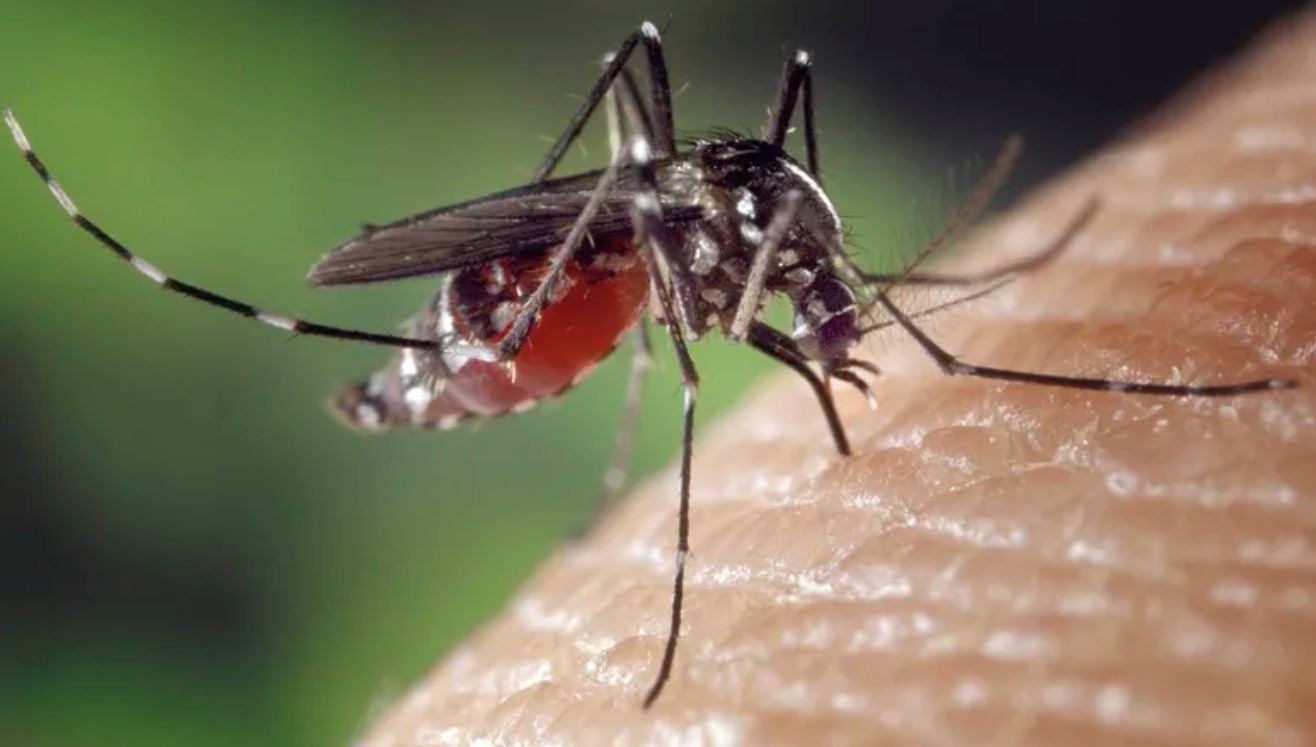
The issue they were tackling concerned insect-borne diseases. Mosquitoes and ticks spread dangerous diseases such as malaria and lyme disease. Add to that how annoying the itching bites can be and there is good reason to seek new ways to repel these pests. The most common repellent for mosquitoes, the active ingredient in many of the repellents you find in the store, is Deet (technically, N,N-diethyl-meta-toluamide). It was discovered 80 years ago after extensive government research. However, it does have certain drawbacks, such as damaging some types of fabrics, not working with all pests, and possibly some negative effects on people.
What the Google researchers discovered was the government had carried on extensive testing in the 1940s when they selected Deet, but what they tested and what were the results was virtually impossible to find. It was stashed away in various places with no practical way to locate it all. However, these were Google researchers and they were aware that Google had scanned and preserved reams of this old stuff as part of Google Books. This allowed them to locate these old reports and review them. What they found was surprising. The government had tested thousands of potential repellents.
Exactly how Google Brain used all this data is beyond the scope of this article, which is another way of saying the computer functions and science are beyond my understanding. The computers are using AI (Artificial Intelligence) to do comparisons of promising molecules to find others that may be useful. Eventually, they came up with a list of 10 molecules that may be more effective than Deet. Further testing will be needed. Hopefully, they will find better repellents that will save lives in areas plagued by disease-bearing insects while making our picnics more pleasant.
The issue for us is old books, and the application of new technology to them. Google Books now has 40 million volumes scanned into their database. This is definitely the information age and that is a lot of data. The issue now is making connections, using the existing data to learn things no one realized was there, and applying it to questions we want to answer today. That is where AI comes in. It can “think” at computer speed, not human speed, and it can sort through voluminous amounts of data in split seconds. Perhaps you've had a chance to ask questions of, or even get stories or poems written on demand for you by ChatGPT. Maybe you have created some unique images through Stable Diffusion. What they can do with AI and data is astonishing, at least to those of us who grew up in the age of pencils and paper. They are fun to play around with, but as Google Brain is proving, AI is serious business. Combine it with data from old books and other sources, and there is no telling what you may discover.
In our own case, over the past 20 years we have put together a database of over 12.5 million records from auctions and other sources pertaining to sales of old books. It has enabled us to not only find descriptions and prices from the past, but to create a scale for estimating the current value of old prices based on an index generated strictly from book sales. We recently developed a method of using the database to estimate the value of entire collections, not just one book at a time. We can estimate how frequently a particular title is likely to come up at auction in the future. We can determine how frequently certain words are used in descriptions of a particular title. Still, there is much more to be learned, not only about books but about the interests of people at various times, and which changes predict our interests in the future. As long as the data has been accumulated, AI will enable us to learn much more than we ever dreamed possible. These are exciting times.